Balance Quality Grades
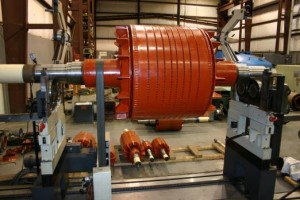 Neither balancing cost considerations, nor various rotor limitations such as journal concentricity, bearing clearances or fit, thermal stability, etc., permit balancing every rotor to as near zero unbalance as might theoretically be thought possible.
A tolerance must be set to allow a certain amount of residual unbalance, just as tolerances are set for various other machine shop operations. The question usually is how much residual unbalance can be permitted while still holding detrimental effects to an insignificant or acceptable level? ISO 21940-11:2016 “Mechanical vibration – Rotor balancing – Part 11: Procedures and tolerances for rotors with rigid behavior” (which supersedes ISO 1940-1:2003 “Mechanical vibration – Balance quality requirements for rotors in a constant (rigid) state. Part 1: Specification and verification of balance tolerances”), gives specifications for rotors in a constant (rigid) state according to their machinery type and maximum service speed. These recommendations are based on worldwide experience.
Balance quality grades are separated from each other by a factor of 2.5. A finer grading may be necessary in some cases, especially when high-precision balancing is required, but it should not be less than a factor of 1.6. A balance quality grade of G6.3 is appropriate to most fans, pumps, gears, etc. A grade of less than G2.5 is usually only achievable on very special equipment. At Rotofix Solutions we constantly exceed these standards, and we offer G2.5 grade balancing in most cases.
Detailed consideration of errors with balancing and verification of residual unbalance are in ISO 21940-14:2012 Mechanical vibration — Rotor balancing — Part 14: Procedures for assessing balance errors (which cancels and replaces ISO 1940-2:1997 – main change is extension of the applicability to rotors with flexible behavior).
ISO 21940-11:2016 does not cover rotors in a flexible state. The balance quality requirements for rotors in a flexible state are covered by ISO 21940-12:2016 “Mechanical vibration — Rotor balancing — Part 12: Procedures and tolerances for rotors with flexible behavior”.